
# LVP vs Hardwood: An Honest Comparison for Long Island Homes
If you've been agonizing over this decision, you're not alone. Roughly half the estimates I write every week come down to the same fork in the road: luxury vinyl plank (LVP) or real hardwood. Both have gotten dramatically better in the last five years. Both will look fantastic in a Nassau or Suffolk County home. But they are very different products, and the right choice depends on your house, your lifestyle, and honestly — how long you plan to stay.
This guide is the conversation I have with homeowners in our Melville showroom. No sales lean. Just what I'd tell my own family.
## The short version
- LVP wins if you have kids and dogs, a wet basement, a slab-on-grade addition, or a 5–10 year timeline before selling.
- Hardwood wins if you're in a classic Long Island Colonial or Cape, plan to stay 15+ years, want maximum resale value, and don't have chronic moisture issues.
- Engineered hardwood splits the difference — real wood veneer over a stable plywood core, safe over radiant heat, safe in most basements.
That's the 30-second answer. Now the actual tradeoffs.
## Cost: LVP is 30–50% cheaper installed
On Long Island in 2026, you're looking at roughly:
- LVP installed: $6–$11 per sq ft (material + labor)
- Engineered hardwood installed: $9–$16 per sq ft
- Solid hardwood installed: $12–$20 per sq ft
- Herringbone or chevron pattern: add 15–30% to labor
For a typical 1,200 sq ft main level, that's a $7,000–$13,000 LVP job versus a $15,000–$24,000 hardwood job. The gap is real, and it's the single biggest reason LVP has taken over the market.
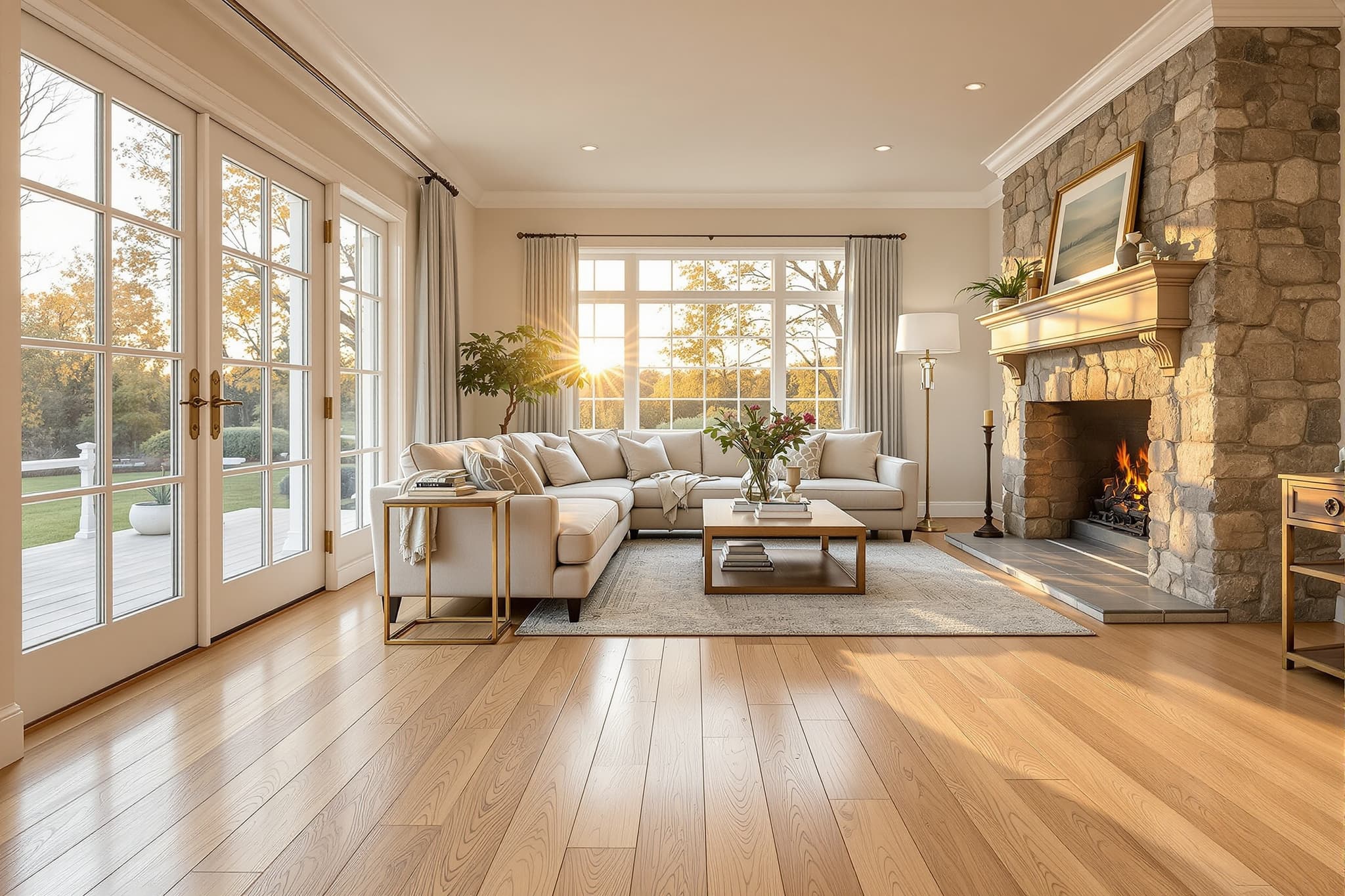
## Durability: it depends what you mean
Here's where people get confused. "Durable" means different things.
Scratch resistance: LVP with a 20-mil wear layer beats every hardwood on the market. Dog nails, pushed-around dining chairs, dropped cast iron — LVP shrugs it off. Hardwood will show every one of those.
Dent resistance: Hardwood wins. Drop a hammer on LVP and you'll leave a permanent divot in the core. Drop it on oak and you'll leave a smaller one that sometimes steams out.
Waterproofing: LVP is genuinely waterproof. Your Labrador can have an accident, your dishwasher can leak, and the floor is fine. Hardwood will cup, crown, or blacken with sustained moisture. This matters more than people think in Long Island homes — especially ranches near the South Shore where groundwater sits higher.
Refinishability: Hardwood wins, hands down. A solid oak floor can be sanded and refinished 4–7 times over its life. An LVP floor that's worn out gets ripped up and replaced. That's why a 1952 Cape in Levittown can still have its original oak — and no LVP floor will ever make it to 2100.
## Resale value on Long Island
I've sat at closing tables with real estate agents across Nassau and Suffolk for 20 years. Here's the honest picture:
- Hardwood adds 1–3% to home sale price in most Long Island markets and removes the "buyer's first project" mental tax from listings.
- LVP is neutral — buyers don't penalize it, but they don't pay a premium either. Except in starter homes under $650K, where LVP actually helps because it signals "move-in ready."
- High-end markets (North Shore gold coast, East Hampton, Garden City) punish LVP in primary living spaces. Buyers at that price point expect real wood.
If you're in a $500K–$800K home and planning to sell in the next decade, LVP is a rational choice. If you're in a $1M+ home or a historic property, hardwood is almost always worth the upcharge.
## Which one handles Long Island weather better?
Our climate is humidity hell for wood. Summer humidity runs 70–85%; winter furnaces drop it to 15–20%. That swing makes solid hardwood expand and contract — you'll see seasonal gaps in January and tight joints in August. It's normal, but some homeowners hate it.
Engineered hardwood is dramatically more stable because its plywood core doesn't move the same way. It's my default recommendation for anything built after 1980, anything with radiant heat, and anything in a basement or over a slab.
LVP is dimensionally stable across temperature, but it has its own quirk: it expands in direct sunlight. South-facing sunrooms and three-season rooms with full-glass walls can push LVP past its rated temperature. For those rooms, porcelain tile or engineered hardwood with a wider expansion gap is smarter.
## What we actually install
In a typical month, we put down roughly:
- 55% LVP (mostly 7–9" wide planks, 20-mil wear layer)
- 30% engineered hardwood (mostly 5–7" white oak)
- 10% solid hardwood (mostly refinish jobs on existing floors)
- 5% tile and specialty work
That ratio tells you where the market is. But the right call for your home isn't "what's popular" — it's what fits your subfloor, your moisture conditions, your kids, and your timeline.
## Still not sure?
Call me. We'll walk through your floor plan, your subfloor type, your priorities, and you'll know in 15 minutes which product makes sense for your house. No sales pressure — half our free estimates end with "you don't actually need to replace anything, refinish it."
That's the right answer more often than you'd think.