
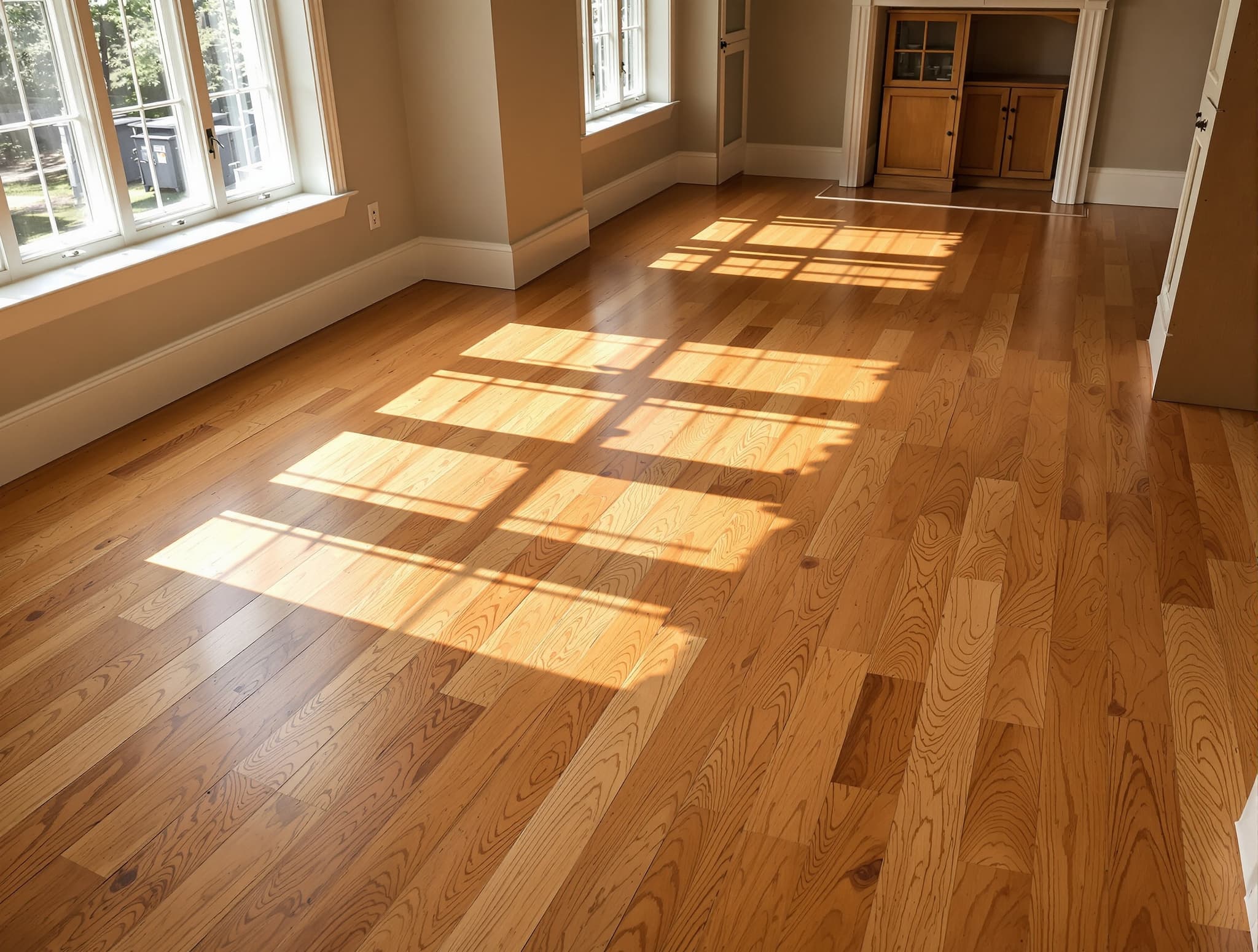
# How Much Does It Cost to Refinish Hardwood Floors on Long Island?
Refinishing is often the most affordable way to bring worn hardwood back. A typical hardwood floor refinishing cost on Long Island is $3 to $5 per square foot. That covers a standard sand and refinish in the wood's natural color. Stain, repairs and stairs add to it.
This guide explains what drives that number. It also covers when refinishing makes sense and when it does not. Every price below is a typical range. Your own quote depends on your floor.
Typical cost to refinish hardwood floors per square foot
Refinishing is usually priced by the square foot. Small jobs often carry a minimum charge. The setup work is about the same for one room or three.
| Type of job | Typical range | Best for |
|---|---|---|
| Screen and recoat | About $1 to $2.50 per sq ft | A dull finish with no deep scratches |
| Sand and refinish, natural color | About $3 to $5 per sq ft | Worn finish and gray traffic lanes |
| Sand, stain and refinish | Higher than a natural finish | Changing the color of the floor |
| Stairs | Priced per step | Treads that need hand sanding |
| Board repairs | Priced per board or per area | Damaged or missing boards |
These ranges assume solid hardwood in fair shape. Heavy damage or extra prep can push the price past the top of the range.
What that looks like for common room sizes
Here is the math at $3 to $5 per square foot.
- A 200 sq ft bedroom comes to about $600 to $1,000. A minimum charge may apply.
- A 500 sq ft living and dining area comes to about $1,500 to $2,500.
- A 1,000 sq ft first floor comes to about $3,000 to $5,000.
These examples are for a natural finish with no repairs. Use them as a starting point for your budget.
What changes the price of refinishing hardwood floors
Two floors of the same size can get very different quotes. These are the main reasons.
The size of the job
Larger jobs often cost less per square foot. The setup, travel and equipment costs are spread over more floor. Doing several rooms at once is usually cheaper than doing them one at a time.
The condition of the wood
Light wear sands out quickly. Deep scratches, pet stains and dark water marks take more sanding. Some dark stains go deep into the wood and will not sand out at all. Those boards have to be replaced.
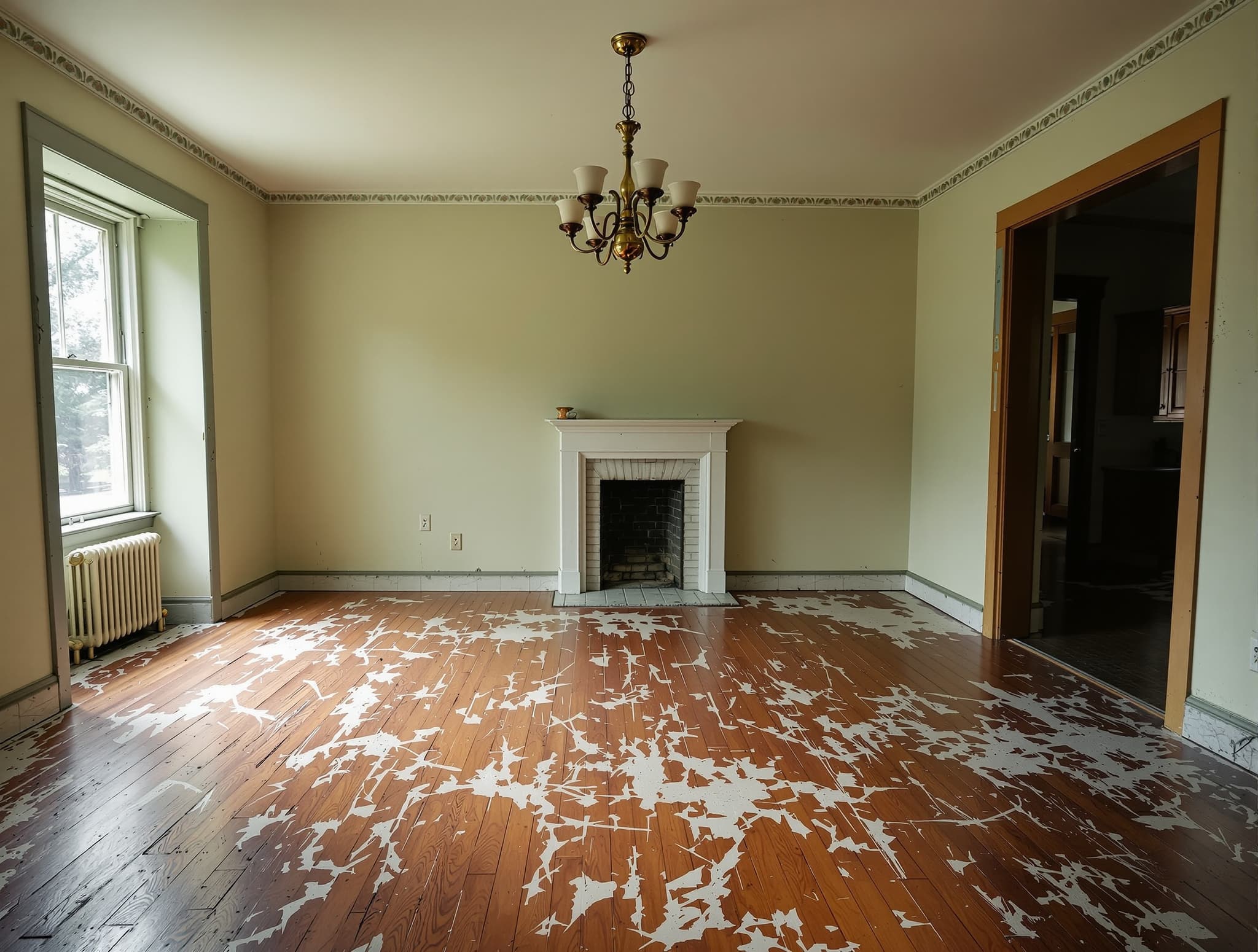
Board replacement is priced on top of the refinish. Matching the species and width of an older floor takes time. Our page on floor repair and board replacement covers how that work is done.
Natural color or a new stain
Keeping the natural color is the simplest option. A stain adds another step and more drying time before the finish coats. Dark stains also show sanding marks more easily. That means extra care on the final sanding pass.
The type of finish
Water-based polyurethane dries fast and has a mild smell. Oil-based polyurethane dries slower and gives the wood a warmer amber tone. Hardwax oils have a matte look and need more upkeep over time. Most jobs get two or three coats, and premium finishes raise the price.
Stairs, trim and furniture
Stairs are sanded mostly by hand, so they are priced per step. Removing and reinstalling shoe molding adds labor. Moving heavy furniture can cost extra unless you clear the rooms yourself.
Carpet over the hardwood
Many older Long Island homes have oak floors hidden under carpet. Pulling up the carpet, pad and tack strips adds labor and disposal. Staples left from the pad also need to come out before sanding starts.
Screen and recoat vs a full refinish
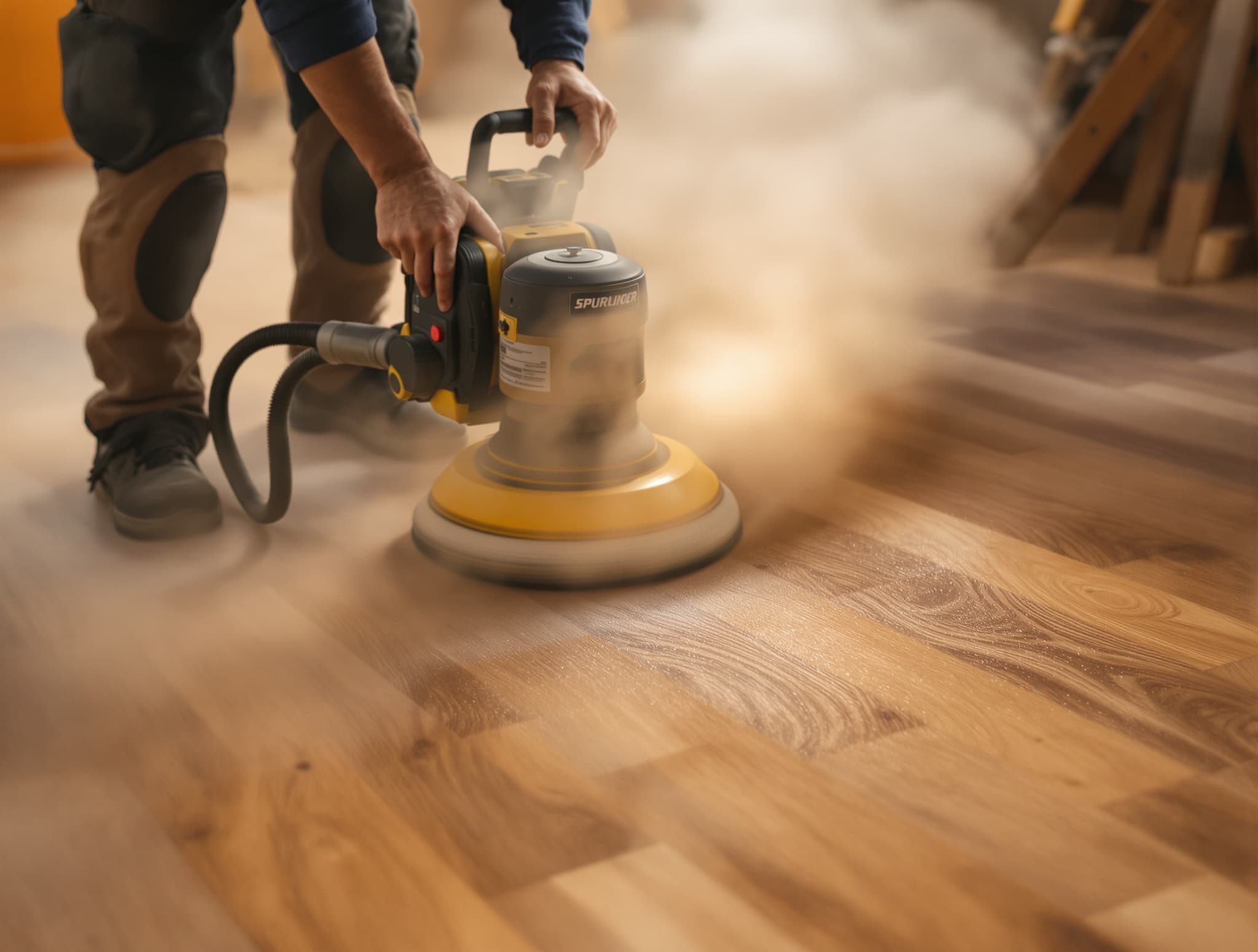
A screen and recoat is a lighter job. The existing finish is scuffed with a buffer and a fresh coat goes on top. It costs much less than a full refinish and is often done in a day.
It only works when the old finish is dull but still intact. Once traffic lanes are worn down to gray wood, a full sand is needed. A recoat every few years can also push back the need for a full refinish.
When refinishing is not the right call
Refinishing only works if there is enough wood left to sand. Solid three-quarter-inch hardwood can usually be sanded several times over its life. Engineered hardwood depends on the thickness of its top layer. A thin top layer may allow one light sanding or none.
Moisture problems come first. Boards that are cupped or crowned need the moisture source fixed before any sanding. Sanding a cupped floor too early can leave it uneven once the wood dries out.
If a large part of the floor is damaged, replacement may make more sense. In that case, compare your refinishing quote with a quote for new hardwood flooring.
Refinishing vs replacing hardwood floors
Refinishing usually costs far less than new hardwood. New flooring adds the cost of the wood itself. It also adds the labor to tear out and haul away the old floor.
A refinish keeps the boards you already have and renews the surface. For a floor that is still flat and solid, that is usually the better value. Our step-by-step refinishing guide walks through each day of the job.
Ways to lower the cost of refinishing
A few simple choices can bring a quote down.
- Clear the furniture out of the rooms before the crew arrives.
- Refinish every room at the same time instead of one room per year.
- Keep the natural wood color instead of adding a stain.
- Book a screen and recoat before the finish wears through to bare wood.
- Fix leaks and humidity problems early so the boards do not cup.
Ask for a written quote that lists each part of the job. That makes it easy to see what you are paying for.
How to get an accurate refinishing price
An online range can only take you so far. A real quote needs someone to see the floor in person. The floor gets measured and checked for damage, moisture and wood thickness. It is also the right time to talk about color and finish.
We handle hardwood floor refinishing all over Long Island. Our pages on flooring in Nassau County and flooring in Suffolk County list the towns we cover. Call (631) 641-5575 to set up a free estimate, or use the form below.